Centre of Excellence

Objective:

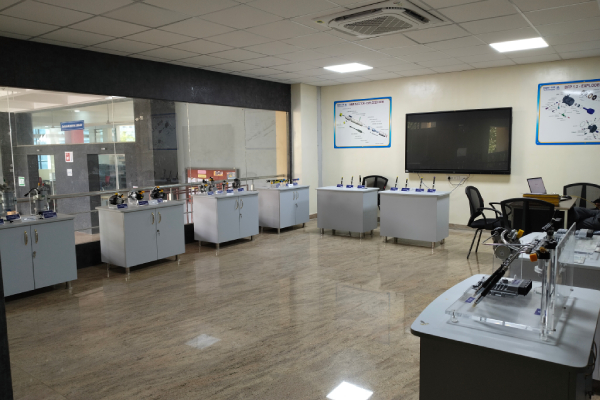
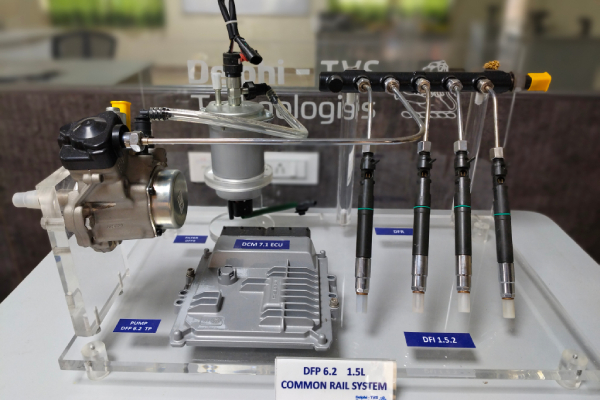
To create facility for the knowledge of Advanced Fuel Injection System in the field of Automotive systems and to get on hand experience of Fuel Injection System.
Scope:

  • Opportunity to tie-up with the industries.
  • Exchange of knowledge between the industry and the institution.
  • Being in par with technology that is in vogue.
  • Bridging the gap between industry and academics.
  • Improving quality of under-graduate project by bringing innovation.
  • Better career opportunity for students.

Facilities Added:

  • Setting up fuel Injection Pressure testing facility.
  • Addition of Variable Compression Ratio engine for research.
  • On line graphical combustion analysis.
  • Addition of Exhaust gas analyzer.

Research and Consulting work:

  • Ongoing research project by research scholars.
  • Research and consultation works in the domain of fuel injector.
  • Student projects in I.C.Engines.
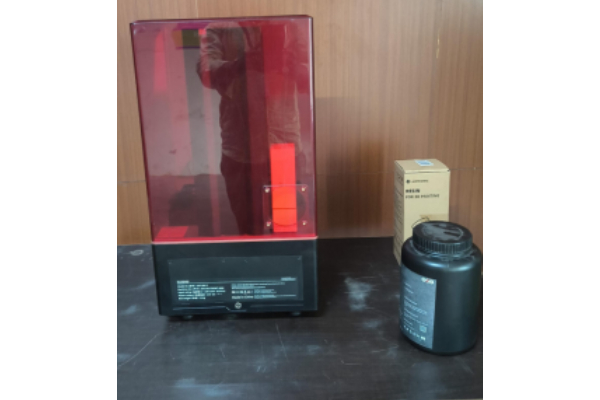
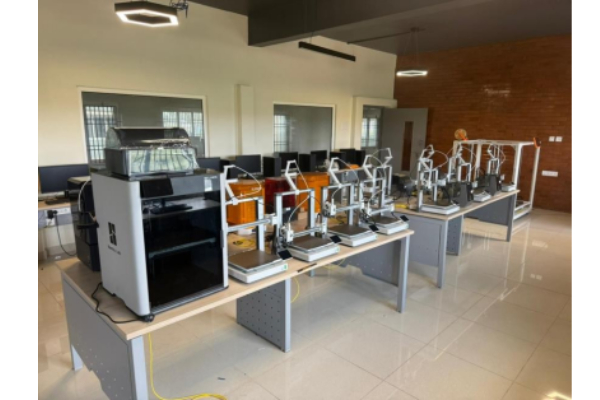
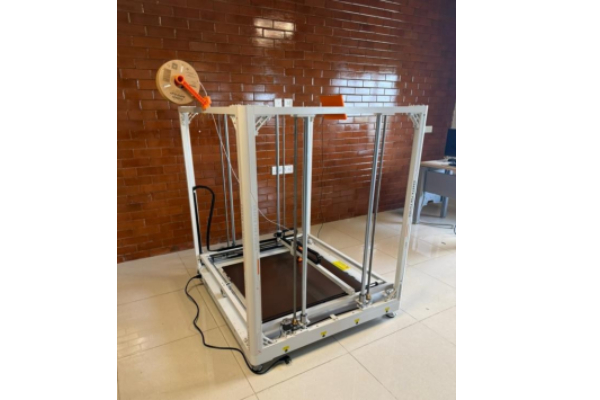
  • The Department of Mechanical Engineering has established a state-of-the-art Additive Manufacturing Laboratory equipped with advanced FDM and SLA-based 3D printing systems, including large- scale, high- speed, multi-material, and high-resolution printers. The facility is supported by auxiliary systems such as filament dryers, wash and cure stations, and automated material handling units.
  • This infrastructure enables undergraduate students to gain experiential learning aligned with Outcome-Based Education(OBE) principles prescribed by NBA and quality benchmarks defined by NAAC. The exposure bridges the gap between theoretical knowledge and industrial practice, fostering competency in modern manufacturing technologies.
  • The exposure to advanced 3D printing technologies enhances employability by aligning student skills with industry requirements in sectors such as:
      1. Automotive and aerospace manufacturing.
      2. Product design and development.
      3. Tooling and fixture design.
      4. Biomedical engineering.
  • The facility also promotes innovation and entrepreneurship by enabling students to develop customized products and explore startup opportunities.

List of Equipments

List of Equipment’s available in Delphi – TVS Technologies centre of Excellence

S. NoName of the EquipmentQuantity
FDM Printer
1Elegoo Orange Storm Giga Build Size: 800*800*1000mm1No
2Creality CR-30(3DPrint Mill- Belt Printer) Build Size:200*170*infinity-mm(Infinite Z-axis)1No
3Flash forge Creator3Pro(IDEX FDM Printer) Build Size: 300 * 250 * 200 mm1No
4Bambu LabA1:FDM 3D Printer Build Volume: 256*256*256mm.10Nos
5Bambu Lab H2S: High Speed FDM Printer Build Volume: 340*320*340mm.1No
6Creality Ender Build Size: 220*220*250mm3Nos
SLA-Stereolithography
1Elegoo Saturn 4 Ultra 16K (Resin Printer) Build Size: 211.68*118.37*220mm2Nos
2Creality LD-002H (Resin Printer) Build Size: 130 * 82 * 160 mm1No
Auxiliary Support System
1Creality Space Pi Filament Dryer Applicable Range: FDM Filament3Nos
2Elegoo Mercury 3.0Plus(Wash & Cure) Washing Volume:230*135*260mm Curing Size: 250 * 290 mm2Nos
3Bambu Lab AMS2Pro Multi-filament feede1No
Computers
1HP Pro Desk 2- Desktop Processor-AMD Ryzen 58500Gw/ Radeon 740 M Graphics (3.55Ghz) Ram - 64 GB - OS - Windows 11 pro (64 bit31Nos
List of Software
1Bambu Studio31Nos
2Chitu box31Nos
3Solid works31Nos
AUTOBOTSSTUDIO –Robotics Centre of Excellence (CoE) is an advanced technological facility established with the objective of fostering innovation, skill development and research in the field of robotics and automation. The centre serves as a platform for students, faculty, and researchers to explore modern industrial automation technologies, bridging the gap between theoretical knowledge and practical applications.

The Robotics CoE is aligned with the growing demand for automation and Industry 4.0 technologies, enabling learners to gain hands-on experience in robotics, artificial intelligence (AI), machine learning (ML), embedded systems, and smart manufacturing systems.

Objectives

The key objectives are:

  • To provide practical exposure to industrial robotics and automation systems.
  • To enhance technical skills relevant to Industry 4.0andsmart manufacturing.
  • To promote inter disciplinary learning and innovation among students.
  • To support research and development activities in robotics and allied fields.
  • To prepare students for national and international competitions such as robotics challenges and hackathons.
  • To facilitate industry collaboration and consultancy projects.

Infrastructure and Facilities

The Robotics Centre of Excellence is equipped with state-of-the-art infrastructure to support training, experimentation, and research. The key facilities include:

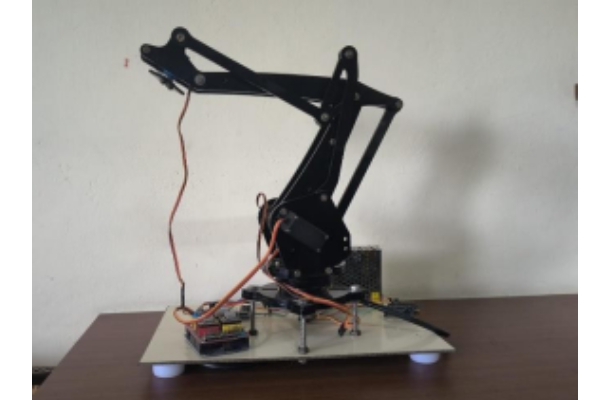
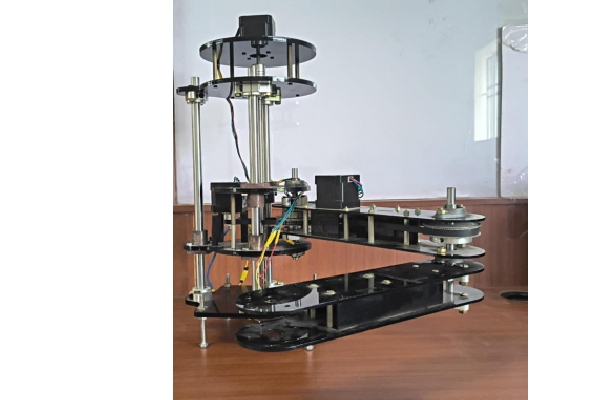
  • Industrial Robotic Arms for pick-and-place, welding, and assembly operations.
  • Simulation Software for robot programming and virtual testing Robot work station operations
      a) Robodk -simulation of various robots with various work station condition
      b) Robo analyzer-Robot path, trajectory, kinematics analysis

AUTOBOTS STUDIO actively promotes research culture by encouraging students and faculty to undertake innovative projects. Key focus areas include:

  • Autonomous mobile robots
  • AI-based predictive maintenance systems
  • Smart manufacturing and IoT-enabled devices
  • Human-robot interaction systems
  • Robotics in healthcare and agriculture

The centre also supports publication of research papers in reputed journals and participation in conferences.
Objective

  • To provide solutions to the acute problems that humankind is facing due to the gradual depletion of the earth’s fossil fuel resources. Exploring the role of clean energy in urban and rural infrastructure development.
  • Incubation of new idea on solar PV technology in association with R&D laboratories/industry.
  • To upgrade the existing solar PV systems as well as develop new type solar PV systems.
  • To learn the design and analysis methodology and bring the concept to the working level and commerice.

Scope

  • Collaborative work with industry on high efficiency solar cells and modules.
  • Possibility to bring the innovative projects in the field of Renewable Energy.
  • To develop the culture of energy saving and bring the decipiline among the users.
  • Create awarness to involve students/public community along with capacity building in establishing, operating and managing Renewable Energy.
  • To provide decentralized energy supply to agriculture, industry, commercial and household sector.
  • Development of smart grid through photovoltaic power system.
  • Entrepreneur development.

Facilities

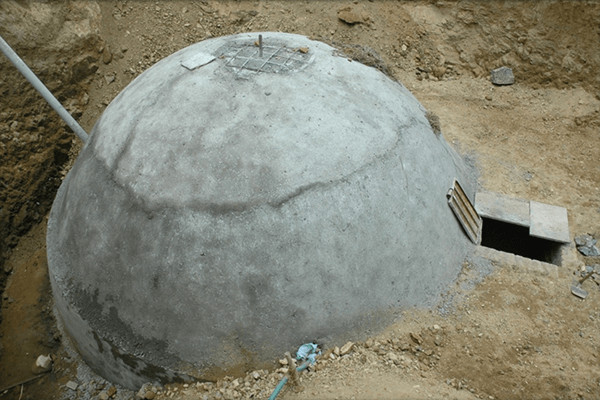
  • 100m3 Night soil based Biogas plant is woring in our campus.
  • Fuel testing facilities (to find the calorific value of the various gas).
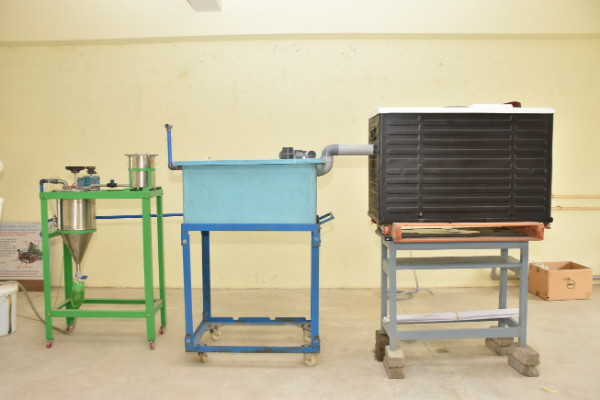
  • Water treatment plant is available.
  • Mini wind turbine power generator.
  • Solar panel performance testing with tracking analysis facilities.
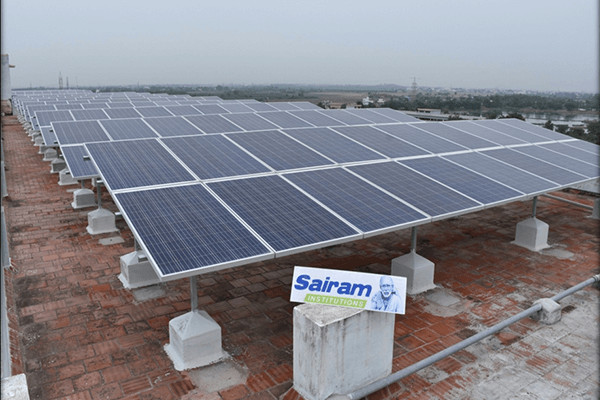
  • 125 kW solar PV – Grid tie plant is established in the college.
  • The kitchen waste are used in digester to produce biogas.

Consultation work

  • Collaborative work with industry on high efficiency solar cells and modules.
  • Solar cell modeling and simulation works are done in college primises.
  • Design and development of roof top PV systems.
  • Inhouse strength with basic fundamental knowledge for analysis and research.
  • Projects (Solar street light, Solar water heating) are done in and around the college premises.
  • Various innovative and new projects in energy have been carried out with the help of industry.

Objectives

The main objective of Centre for Measurement and Metrology is to undertake industrial consultation for performing reverse engineering, calibration of measuring instruments and also providing training for the metrologist.

Scope

  • To perform Calibration of instruments
  • To obtain High-speed acquisition to measuring
  • To measure deviation maps from CAD for industrial products
  • To analyse deviation maps from CAD for reverse engineering work
  • To check angularity, circularity, symmetry, cylindricity of industrial shafts

Facilities available

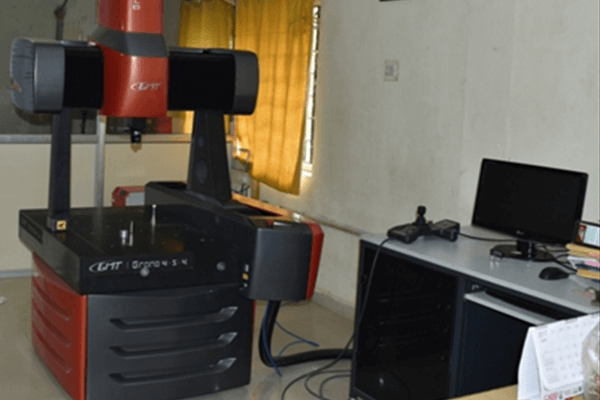
  • coordinate Measuring Machine (CMM)
  • Profile Projector
  • Autocollimator
  • 3D – Printer

Using CMM, lot of research work has been done for reverse engineering and concurrent engineering. Number of consultancy work has been done in the above said fields.
Consultation works done:

  • Implementation of Concurrent Redesign & Manufacture procedure for an Automotive Component.
  • Implementation of Reverse Engineering for Crankshaft Industry.

Materials are real blessings to mankind; in the modern technological worlds the need of the day is advanced materials for growing technological advancements. The Composites are most sought engineering materials due to its wide span of applications in well prominent field of engineering.

Objectives:

To provide

  • Hands on training in preparing composite materials.
  • Information’s pertaining to composite material strength and its mechanical behavior.
  • Provide consultancy work in the area of metal matrix composites.
  • Carry out fiber reinforced Laminate design for different combinations of plies with different orientations of the fiber.
  • Carry out corrosion study on Engineering materials.

Scope:

  • To find avenues in most appropriate composite material development.
  • To develop composite materials in an optimized way.
  • To characterize the various important aspects of Composite materials.

Facilities available:

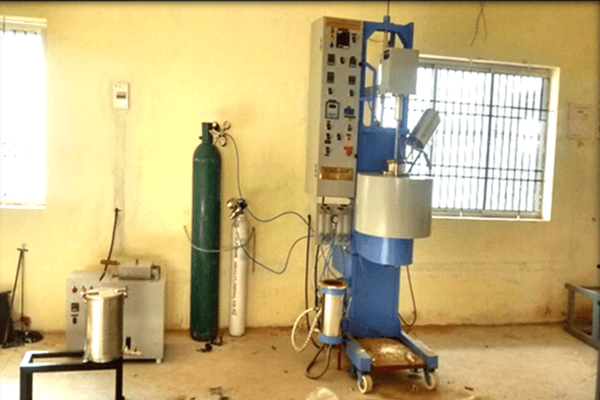
Bottom pouring type stir casting furnace for Aluminium / Magnesium

The equipment is used for Aluminium& Magnesium research purposes in which the user can melt the metal, preheat the nano/micro particles, drop it to the melt and stir it at high speed. Once the mixing is complete, just by a button press the composite/melt is poured into the die/mould of desired shape. A special provision for inert gas supply is available for the furnace to control unwanted atmospheric reaction.

Cryogenic & Heat Treatment Setup with Multipurpose Heat Treatment Furnace:

Heat Treatment:

Maximum attainable temperature: 1150 0C
Exterior: Fitted on a M.S. frame with split door at the top with provision for inert gas.
Temperature control: PID based Programmable Temperature controller.

Cryogenic Treatment test rig:

Stainless steel vacuum chamber with temperature indicator and suitable sensor to read temperature of (minus) -196 deg.C.

Salt Fog Corrosion Study test Setup:

Salt Spray Chamber :

600 mm X 400 X400 mm chamber size with cover and water sealing.
Acrylic material, nozzle and water can for holding the electrolyte.
Rods for suspending the specimen, hose and other accessories
Compressor of 3 hp capacity operating at along with pressure adjuster to along with water filter.
Objectives:

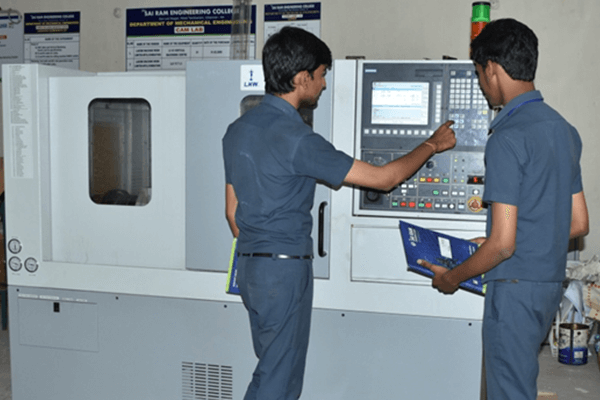
The Flexible Manufacturing System Centre has been established to provide training on par with the requirement of the industry. This Centre entered into a collaboration arrangement to extent the knowledge to the students, Industries and practicing professionals. The vision behind it is to promote and encourage student activities, research projects and relevant courses related to this field.
Scope:

  • Establish Research facilities in the area machining.
  • Undertake the research projects to meet the requirements of the Industry
  • To serve as a link between Industry and Academia and provide Consultancy
  • To provide hands on training on Robot Programming

Facilities Available:

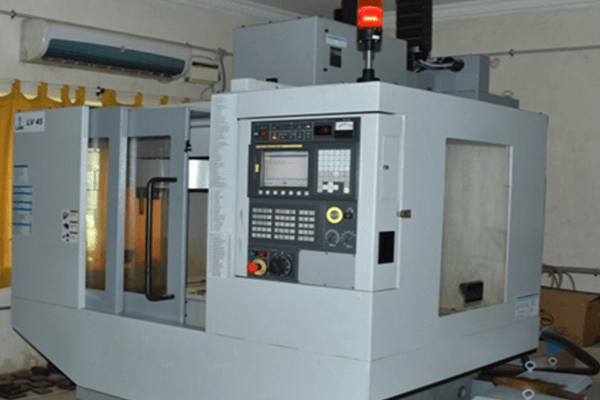
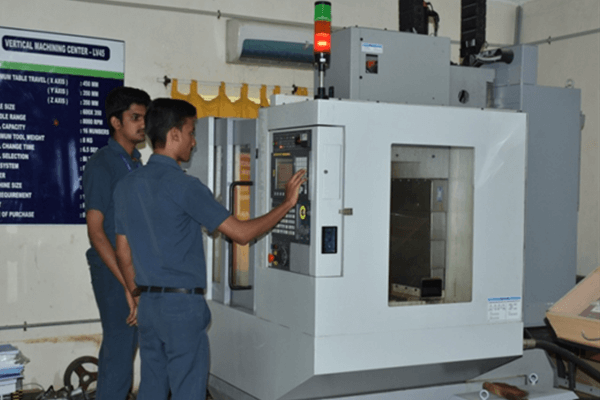
  • CNC Vertical Milling Centre
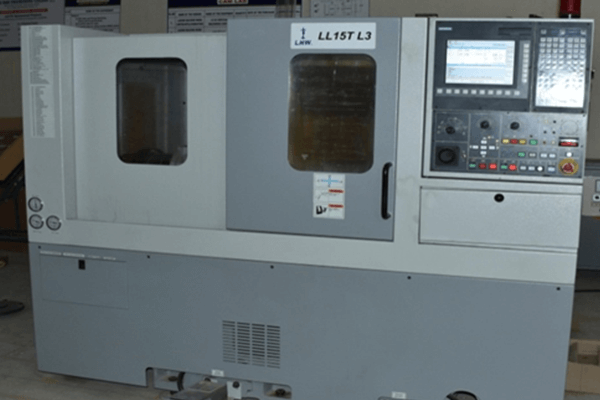
  • CNC Lathe
  • Robot – Five Axis rotation – Articulated 5-Axis, 360º rotation
  • Simulation software using Siemens

Consultation work

  • A few research project works have been carried out for the research scholars.
  • Research and consultation works have been carried out in the small industry which is situated in and around the college premises.

Industry supported Laboratory

  • The Precision Engineering and Technology Centre is a TIEMA initiative supported by the Government of Tamil Nadu under the Precision Manufacturing Mega Cluster.
  • It focuses on innovation of advanced manufacturing technologies like 3D printing, CNC machining, and product prototyping to support MSMEs, startups, and students. The centre provides facilities for design, testing, training, and innovation to strengthen industry–academia collaboration and boost manufacturing capabilities.
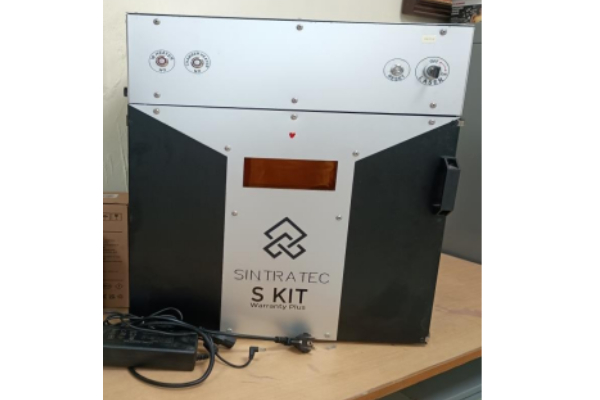
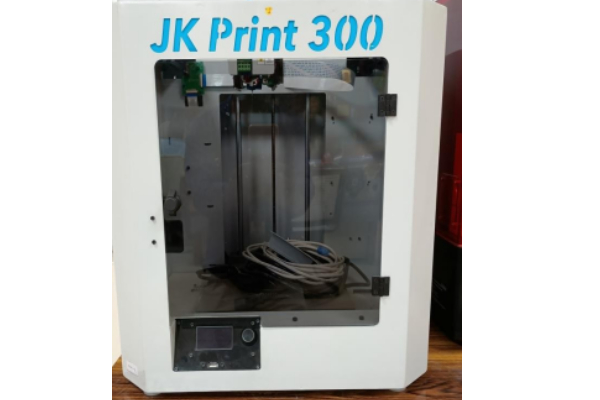
  • Its extended facility for additive manufacturing is a vailable mechanical engineering department with three sophisticated 3D printing machines

Facilities available:

    1. JK make- FDM machine

    2. Sintrack make- SLS machine

    3. Elegoo make -MSLA machine